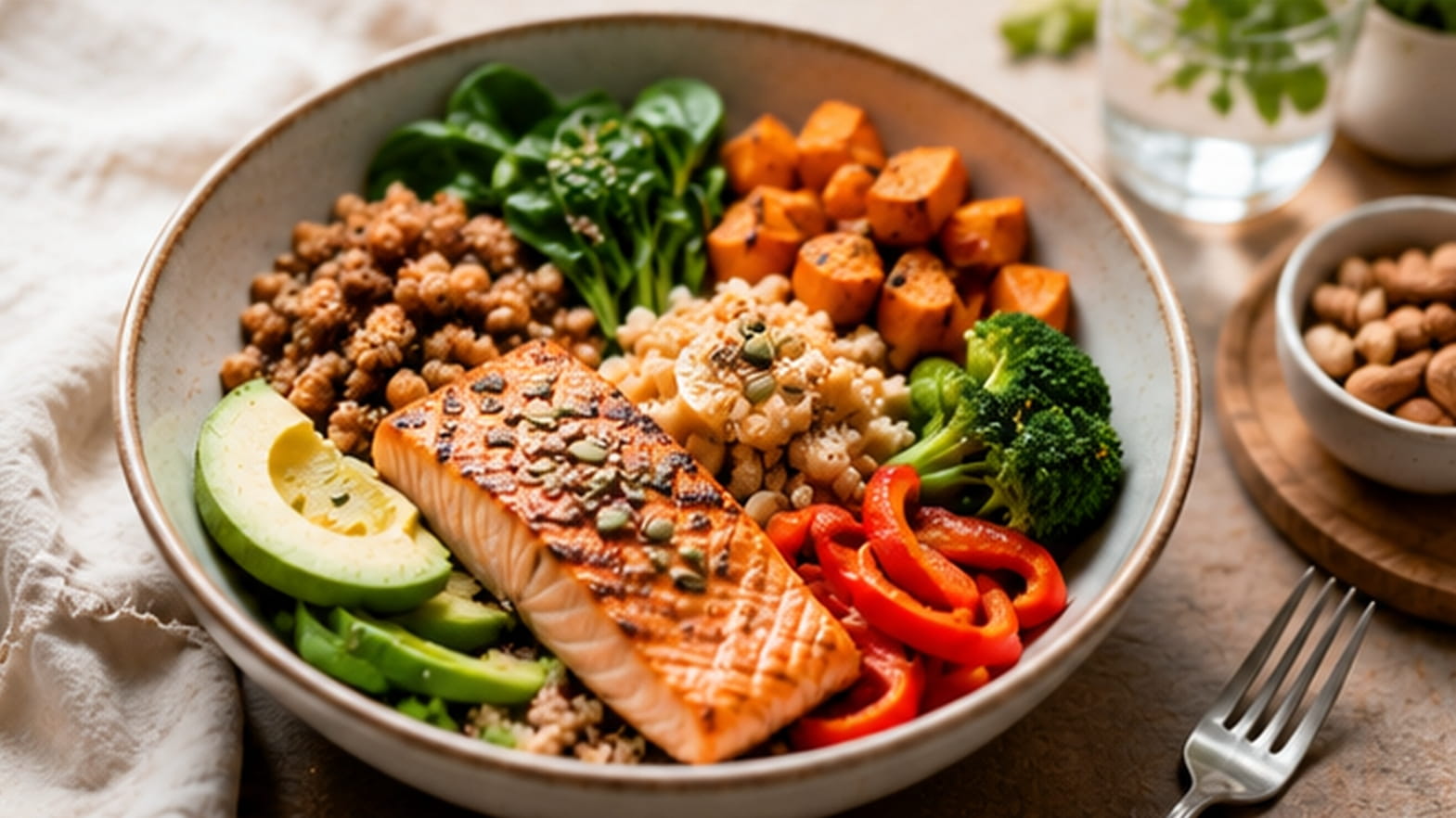
A practical way to eat well without chasing perfection
Healthy eating is often made to sound more complicated than it needs to be.
One week, carbohydrates are blamed. The next, it is seed oils, dairy, gluten, fruit or eating after a certain hour. Social media rewards certainty, novelty and dramatic rules. Good nutrition is usually less exciting: eat mostly nutritious foods, include plenty of plants, choose sensible portions and follow a pattern you can maintain.
A healthy diet does not need to be perfect, expensive or based on a fashionable label. It should nourish your body, suit your health needs and fit reasonably well with your culture, budget and daily life.
Focus on your overall pattern
No single meal determines whether your diet is healthy.
What matters most is the pattern you follow over weeks, months and years. A nutritious eating pattern can support heart health, metabolic health, digestion, bone and muscle strength, and a healthy weight. Australia’s current dietary guidance recommends eating a wide variety of foods from five main groups: vegetables and legumes, fruit, mostly wholegrain cereals, varied protein foods, and milk, yoghurt, cheese or suitable alternatives.
The 2013 Australian Dietary Guidelines remain the current national guidelines while an updated version is being developed. NHMRC’s published development timetable places draft revised guidelines, public consultation and final publication across 2026–27.
For most people, the broad principles are straightforward:
- Eat plenty of vegetables and some fruit
- Choose mostly wholegrain or high-fibre carbohydrates
- Include a useful source of protein at meals
- Choose mostly unsaturated fats
- Drink mainly water
- Keep highly processed discretionary foods as a smaller part of your diet
Build meals around plants
Vegetables, legumes, fruit, wholegrains, nuts and seeds provide fibre, vitamins, minerals and a wide range of naturally occurring plant compounds.
You do not need to become vegetarian to benefit from eating more plants. Start by increasing the amount and variety already on your plate.
Useful options include:
- Adding salad or vegetables to lunch
- Using frozen vegetables when time is limited
- Adding lentils or beans to soups, curries and mince dishes
- Choosing fruit as a regular snack
- Replacing some refined grains with oats, wholegrain bread, brown rice or barley
- Including a handful of unsalted nuts
Include enough protein
Protein helps maintain muscle, repair tissues and support normal body function.
Good sources include fish, eggs, lean meat, poultry, tofu, yoghurt, milk, legumes, nuts and seeds. Try to vary your choices rather than relying on one source every day.
Many people eat most of their protein at dinner. Including protein at breakfast and lunch can help you meet your needs and make meals more satisfying.
Individual protein needs vary. Older adults, athletes, people recovering from illness and those losing weight may need more careful planning. A GP or accredited practising dietitian can help if you have kidney disease, frailty, poor appetite or another condition affecting your nutritional needs.
Choose carbohydrates for quality
Carbohydrates are not one single type of food.
Oats, lentils, apples, soft drinks and confectionery all contain carbohydrates, but they do not affect nutrition in the same way. Wholegrain and high-fibre carbohydrate foods provide nutrients and are generally more filling than highly refined alternatives.
Australia’s dietary guidance recommends that grain foods be mostly wholegrain or high in cereal fibre. Useful choices include:
- Rolled oats and wholegrain bread
- Brown or basmati rice, barley or quinoa
- Wholemeal pasta
- Beans, lentils and chickpeas
- Potatoes or sweet potatoes served with other nutritious foods
You do not need to remove carbohydrates unless there is a specific medical reason. Portion size, food quality and what you eat alongside them usually matter more than simply labelling all carbohydrates as good or bad.
Prefer healthy fats
Unsaturated fats from olive oil, nuts, seeds, avocado and fish can form part of a healthy diet. Foods high in saturated fat, including many pastries, fried takeaway foods, processed meats and rich desserts, are better eaten less often.
A Mediterranean-style pattern is one practical example. It emphasises vegetables, fruit, wholegrains, legumes, nuts, fish and olive oil, with less red and processed meat and fewer packaged foods. These principles can be adapted to many cuisines.
Make discretionary foods occasional, not forbidden
Foods such as biscuits, cakes, confectionery, chips, fried takeaway meals, processed meats, sugary drinks and alcohol are described in the Australian Dietary Guidelines as discretionary choices.
They are not necessary for nutrition and are often high in kilojoules, added sugar, salt or saturated fat while being relatively low in fibre and essential nutrients.
That does not mean you can never eat them.
Rigid food rules can be difficult to sustain and may create an unhealthy sense of guilt. A more realistic approach is to keep these foods as a smaller and less frequent part of your overall diet.
Do not rely on supplements to fix your diet
Vitamin and mineral supplements are useful in certain situations, but they do not replace a varied diet.
Supplements may be needed during pregnancy, for a diagnosed deficiency or in some medical conditions, but high doses can cause harm or interact with medicines. Discuss regular supplements with your GP or pharmacist.
Make healthy eating easier
Willpower is unreliable when you are tired, busy or very hungry. Your environment often matters more.
Simple strategies include:
- Keeping easy meals available in the freezer
- Using pre-cut or frozen vegetables
- Cooking extra portions for another day
- Carrying fruit, yoghurt or nuts as snacks
- Planning several reliable weekday meals
Healthy food does not have to be gourmet. Eggs on toast with vegetables, a bean-based soup, tuna and salad, yoghurt with fruit, or a simple stir-fry can all be useful meals.
When to seek advice
Speak with your GP or an accredited practising dietitian if you have:
- Unplanned weight loss
- Ongoing difficulty swallowing
- Persistent vomiting or diarrhoea
- Symptoms suggesting an eating disorder
- Significant food restriction
- Kidney, liver or gastrointestinal disease
- Diabetes requiring individual dietary advice
- Frailty or poor appetite
- Concerns about a child’s growth or nutrition
Personalised nutrition advice is especially important when different medical needs appear to conflict.
Start with one change
Choose one practical improvement rather than trying to rebuild your entire diet.
You might:
- Add one extra serve of vegetables each day
- Replace one sugary drink with water
- Include a protein source at breakfast
- Cook one legume-based meal each week
- Change white bread to wholegrain
- Pack lunch twice a week
Repeat that change until it feels normal, then consider the next one.
The bottom line
A healthy diet is not defined by perfection, one superfood or a long list of forbidden ingredients.
Build most meals from vegetables, fruit, wholegrains, varied protein foods and healthy fats. Drink mainly water, keep discretionary foods in proportion and choose an eating pattern you can maintain.
The best diet is not the most extreme one. It is the one that supports your health and still works in real life.

Dr Quinten Willemse
Important information
This guide provides general health information and does not replace personalised medical advice. Speak with your GP or healthcare professional about recommendations appropriate to your medical history and circumstances.
Evidence and further reading
- National Health and Medical Research Council — Australian Dietary Guidelines and Australian Guide to Healthy Eating (2013; current national guidance while revision is underway).
- National Health and Medical Research Council — Review of the 2013 Australian Dietary Guidelines; guideline development and review updates (2026).
- Australian Government, Eat for Health — Australian dietary guidelines 1–5.
- Australian Government, Eat for Health — About the Australian dietary guidelines.
- Healthdirect Australia — Mediterranean diet.