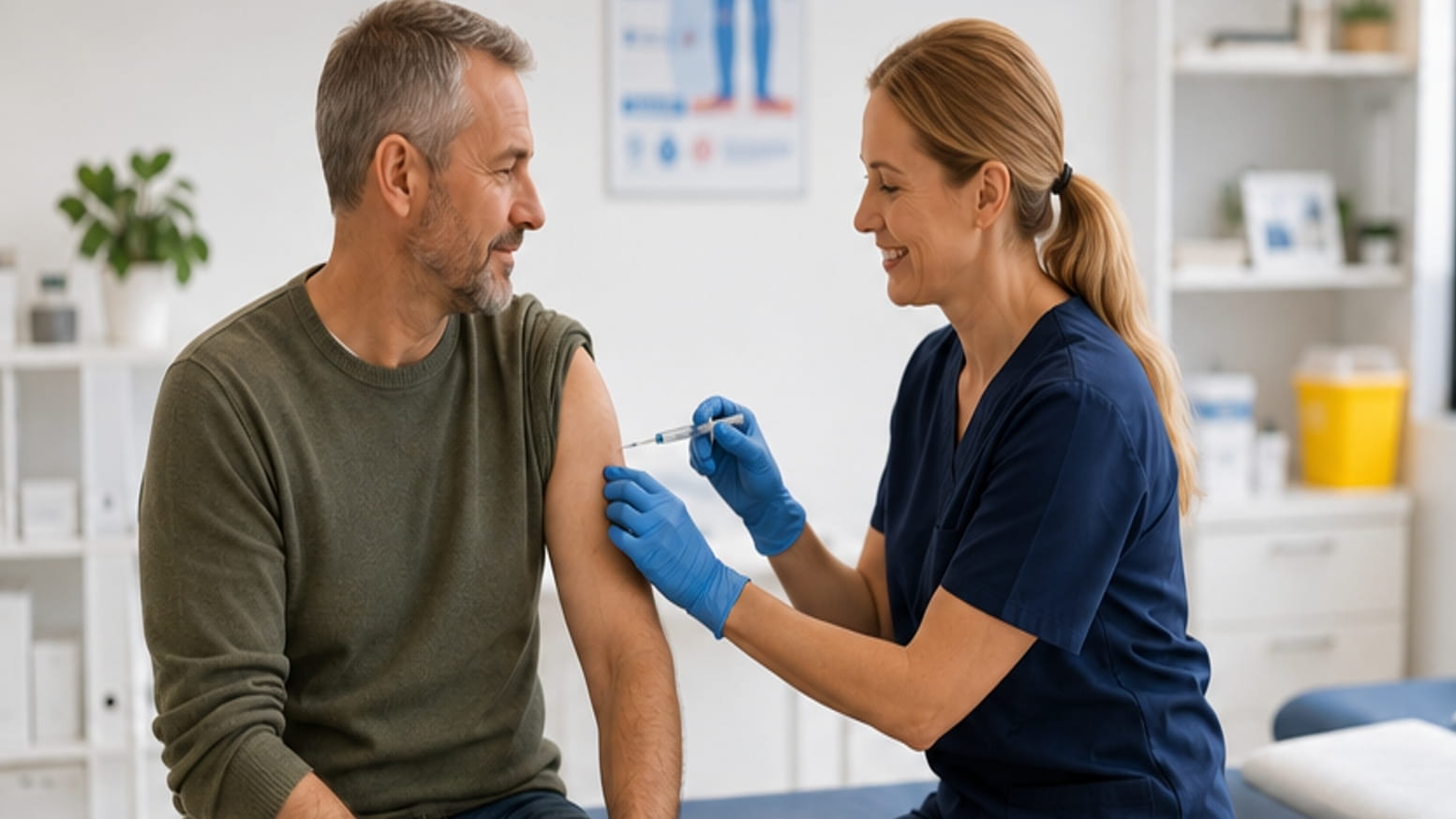
Which vaccines adults may need, when boosters matter and how to check whether you are up to date
Vaccination does not end in childhood.
Some vaccines need boosters because protection reduces over time. Others are recommended later in life because the risk of serious illness increases with age. Pregnancy, travel, work, medical conditions and previous vaccination history can also change what you need.
Australia’s vaccination recommendations are updated regularly. The right schedule depends on your age, health, occupation, pregnancy status, Aboriginal or Torres Strait Islander status and whether you completed your earlier vaccines.
A vaccination review with your GP or pharmacist can identify gaps before illness or travel makes them urgent.
Vaccines that many adults need
There is no single adult schedule that suits everyone.
Commonly recommended adult vaccines include:
- Influenza
- COVID-19
- Shingles
- Pneumococcal disease
- Respiratory syncytial virus, or RSV
- Tetanus, diphtheria and pertussis
- Measles, mumps and rubella
- Human papillomavirus, or HPV
- Vaccines for travel, work or specific medical risks
Some are funded through the National Immunisation Program for eligible people. Others may be recommended but need to be purchased privately. State and territory programs can also differ.
Influenza vaccination
Influenza vaccination is recommended every year for people aged six months and over.
The vaccine is updated regularly because circulating influenza strains change. Vaccination is usually offered before the winter influenza season, but it may still be worthwhile later in the year if influenza continues to circulate.
Annual vaccination is particularly important for people at greater risk of severe illness, including:
- Adults aged 65 and over
- Aboriginal and Torres Strait Islander people
- Pregnant women
- People with certain chronic medical conditions
- People who are immunocompromised
- Healthcare and aged-care workers
Some people are eligible for a free influenza vaccine under the National Immunisation Program, while others may need to pay.
Influenza vaccination cannot cause influenza because the injectable vaccines used in adults do not contain live influenza virus.
COVID-19 vaccination
COVID-19 recommendations depend on age, medical risk and the date of your most recent dose or infection.
Some adults are advised to receive regular additional doses, while younger healthy adults may need them less often. Recommendations can change as immunity, circulating variants and vaccine formulations evolve.
Your GP or pharmacist can check the current Australian advice for your age and risk profile.
COVID-19 and influenza vaccines can generally be given at the same appointment when both are due.
Shingles vaccination
Shingles is caused by reactivation of the virus that causes chickenpox.
It can cause severe pain and may lead to persistent nerve pain known as post-herpetic neuralgia.
A two-dose shingles vaccine is recommended for:
- Immunocompetent adults aged 50 and over
- Immunocompromised adults aged 18 and over
Under the National Immunisation Program, free shingles vaccination is available to eligible age and risk groups, including Aboriginal and Torres Strait Islander adults from an earlier age than the general population.
The usual interval between doses is two to six months for immunocompetent adults. A shorter interval may be used for some immunocompromised people.
People who have previously had shingles can still benefit from vaccination after they recover.
Pneumococcal vaccination
Pneumococcal bacteria can cause pneumonia, bloodstream infection and meningitis.
Australian recommendations changed in 2026. A single dose of the newer 21-valent pneumococcal conjugate vaccine is now recommended for all adults aged 65 and over.
It is funded through the National Immunisation Program for eligible adults aged 65 and over. Aboriginal and Torres Strait Islander adults may qualify from age 25, and younger adults with certain medical risk conditions may also be eligible.
People who previously received another pneumococcal vaccine may still be advised to receive the newer vaccine, usually at least 12 months after their last dose.
Because the schedule changed recently, older vaccination records should be reviewed rather than assuming no further dose is needed.
RSV vaccination
Respiratory syncytial virus can cause serious lower respiratory infection, particularly in older adults, infants and people with certain health conditions.
A single RSV vaccine dose is recommended for all adults aged 75 and over.
Under the National Immunisation Program, RSV vaccination is funded for adults aged 75 and over. Aboriginal and Torres Strait Islander adults may qualify from age 60.
Where practical, vaccination is ideally offered before the RSV season, which commonly occurs from April to September. Current evidence suggests protection lasts at least two years, while future revaccination guidance remains under review.
RSV vaccination may also be considered for some adults aged 60–74, especially when medical conditions increase the risk of severe disease.
Tetanus, diphtheria and whooping cough boosters
Adults should have completed a primary course of tetanus- and diphtheria-containing vaccine.
A booster may be recommended for:
- Adults aged 50 and over who have not received a dose within the previous 10 years
- Adults aged 65 and over
- People in close contact with young infants
- People with certain wounds
- Laboratory or occupational risk groups
- Anyone who never completed the original course
At least one adult booster should include pertussis protection using a dTpa vaccine.
A tetanus booster may be needed after a contaminated or deep wound when the previous dose was more than five years ago.
Parents, grandparents and carers expecting close contact with a newborn should check whether their pertussis vaccine is current, ideally before the baby arrives.
Measles, mumps and rubella
Adults born during or after 1966 should generally have documented evidence of two measles-containing vaccine doses given at least four weeks apart, or laboratory evidence of immunity.
People born before 1966 are usually considered likely to have acquired natural immunity, although exceptions occur.
Adults without evidence of two doses may need catch-up vaccination, particularly before overseas travel, working in healthcare or during an outbreak.
Measles is highly contagious, and outbreaks can occur when infected travellers return to Australia.
The measles, mumps and rubella vaccine is a live vaccine and is not suitable during pregnancy or for some immunocompromised people.
HPV vaccination
HPV vaccination protects against virus types that cause most cervical cancers and several other cancers.
Free catch-up HPV vaccination is available through the National Immunisation Program up to and including age 25.
Adults aged 26 and over are not routinely recommended to receive HPV vaccination, but some may still benefit depending on future exposure risk, immune status or other circumstances.
Men who have sex with men are among the adult groups who may be recommended vaccination beyond age 25. Adults starting HPV vaccination at age 26 or older usually require three doses.
Vaccination does not treat an existing HPV infection and does not replace cervical screening.
Vaccination during pregnancy
Vaccination protects both the pregnant person and the baby.
Vaccines routinely recommended during pregnancy include:
- Influenza
- Pertussis
- RSV
The timing of pertussis and RSV vaccination is important because antibodies need time to pass to the baby before birth.
Some vaccines containing live viruses are not given during pregnancy. Vaccination planning is therefore useful before conception, particularly for measles, mumps, rubella and chickenpox.
Pregnant people should follow the current Australian pregnancy immunisation schedule rather than relying on previous pregnancy advice, as recommendations may change.
Vaccines for medical risk conditions
Some medical conditions increase the chance that an infection will become severe.
Additional vaccines or altered schedules may be recommended for people with:
- Chronic heart or lung disease
- Diabetes
- Chronic kidney disease
- Chronic liver disease
- Asplenia or poor spleen function
- Immune suppression
- Cancer treatment
- Organ transplantation
- Cochlear implants
- Cerebrospinal fluid leaks
- Certain neurological or metabolic conditions
The Australian Immunisation Handbook maintains a current risk-condition table because recommended vaccines and funding can differ by condition.
Bring an accurate medication list to your vaccination review, especially if you use immune-suppressing medicines.
Travel and occupational vaccines
Routine Australian vaccines may not cover all travel risks.
Depending on your destination and activities, you may need vaccines for:
- Hepatitis A
- Hepatitis B
- Typhoid
- Yellow fever
- Japanese encephalitis
- Rabies
- Meningococcal disease
- Cholera
- Polio boosters
Travel advice should ideally begin at least six to eight weeks before departure, although last-minute advice is still worthwhile.
Healthcare workers, childcare workers, laboratory staff, emergency workers and people exposed to animals or human body fluids may also need specific vaccines or documented immunity.
What if your vaccination records are incomplete?
Do not assume that missing paperwork means nothing can be done.
Your GP, pharmacy or vaccination provider may check the Australian Immunisation Register. Older vaccines may not always have been recorded, especially those given before adult reporting became routine or those administered overseas.
When reliable evidence is unavailable, catch-up vaccination may be recommended. In many situations, receiving an additional dose is safer than remaining unprotected.
Catch-up schedules aim to complete protection efficiently without restarting every vaccine course from the beginning.
Can vaccines be given together?
Many vaccines can be administered at the same appointment using separate injection sites.
This can reduce delays and improve the chance that all recommended vaccines are completed.
Some live vaccines need to be given on the same day or separated by a specified interval. Your vaccination provider will check timing, previous doses and current health.
Minor illnesses such as a mild cold do not always require vaccination to be postponed. A significant acute illness may justify waiting until recovery.
Common reactions and vaccine safety
Common vaccine reactions include:
- Pain, redness or swelling at the injection site
- Mild fever
- Headache
- Fatigue
- Muscle aches
These effects usually settle within a few days.
Serious allergic reactions are rare, which is why vaccination providers keep people under observation for a short period after vaccination and are trained to manage anaphylaxis.
Vaccines used in Australia undergo safety assessment and ongoing monitoring. Recommendations in the Australian Immunisation Handbook are developed by ATAGI and approved by the National Health and Medical Research Council.
When to delay or avoid a vaccine
Vaccination may need individual planning if you:
- Had a severe allergic reaction to a previous dose or vaccine ingredient
- Are pregnant
- Are immunocompromised
- Recently received blood products
- Are acutely unwell
- Take medicines affecting your immune system
- Are due to start chemotherapy or another immune-suppressing treatment
This does not always mean vaccination is impossible. It may mean choosing a different vaccine, adjusting timing or obtaining specialist advice.
Start with one change
Choose one useful action:
- Ask your GP or pharmacist to check the Australian Immunisation Register
- Book your annual influenza vaccination
- Check whether you are due for shingles vaccination
- Ask about pneumococcal or RSV vaccination based on your age
- Review pertussis vaccination before a new baby arrives
- Arrange travel-vaccine advice early
- Bring overseas vaccination records to your next appointment
A ten-minute vaccination review can prevent years of uncertainty.
The bottom line
Adult vaccination protects against diseases that can cause severe illness, disability and death.
The vaccines you need depend on your age, health, pregnancy status, occupation, travel and previous doses. Important adult vaccines include influenza, COVID-19, shingles, pneumococcal disease, RSV, tetanus, diphtheria, pertussis and catch-up vaccines such as MMR.
Recommendations and funding change over time. In 2026, notable updates include funded pneumococcal vaccination from age 65 and RSV vaccination from age 75 for eligible adults.
Check your records rather than assuming childhood vaccination provides lifelong protection against everything.

Dr Quinten Willemse
Important information
This guide provides general health information and does not replace personalised medical advice. Vaccine recommendations, eligibility and funding can change.
Speak with your GP, pharmacist or vaccination provider about the schedule appropriate to your age, medical history, medicines, pregnancy status, occupation and travel plans.
Evidence and further reading
- Australian Government Department of Health, Disability and Ageing — National Immunisation Program Schedule, June 2026.
- Australian Government Department of Health, Disability and Ageing — Immunisation for adults.
- Australian Immunisation Handbook — current adult vaccination recommendations.
- Australian Immunisation Handbook — Catch-up vaccination.
- Australian Government Department of Health, Disability and Ageing — Adult vaccinations brochure, July 2026.