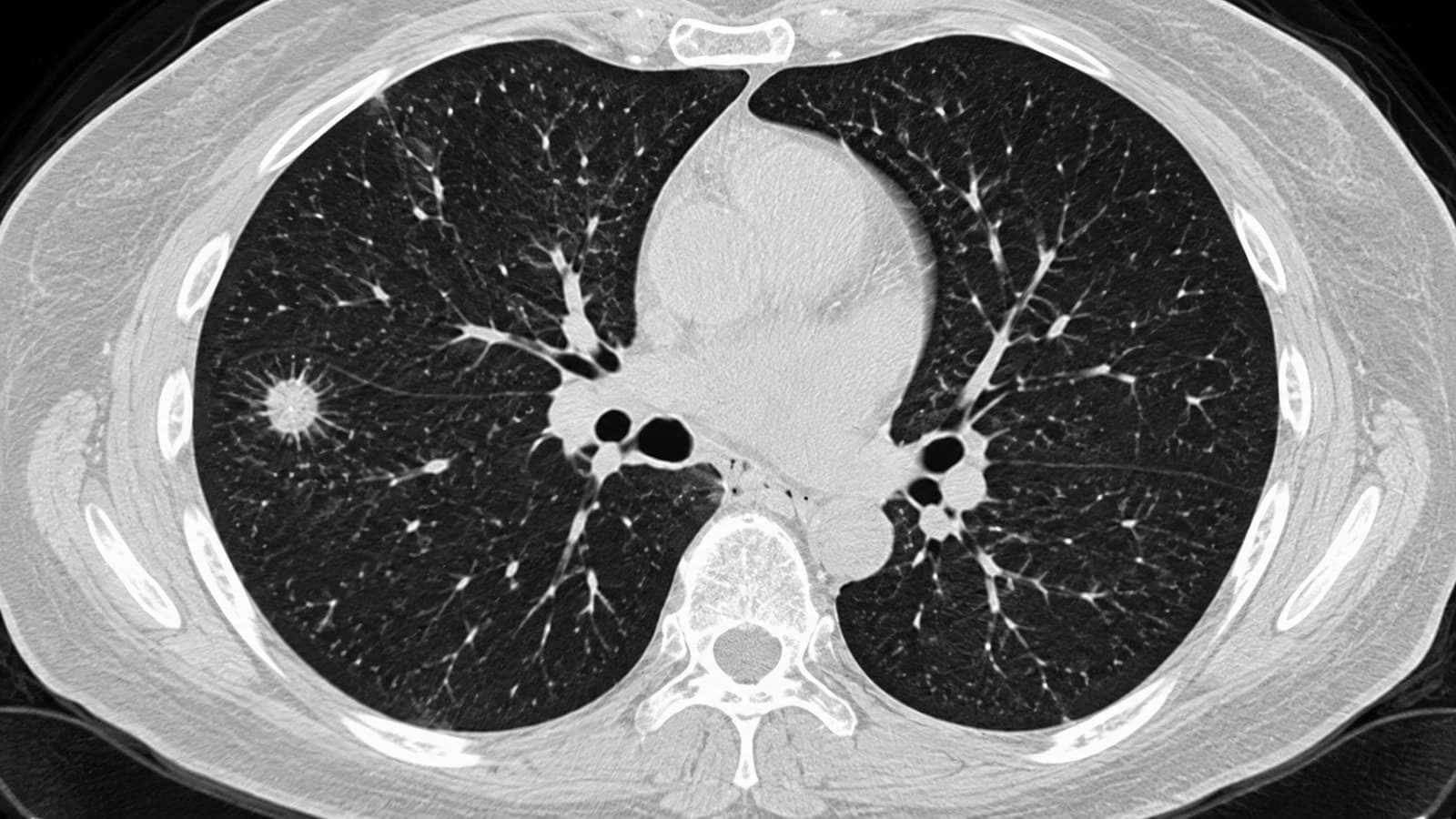
A practical guide to Australia’s National Lung Cancer Screening Program, who qualifies, what a low-dose CT involves and what happens if something is found
Australia now has a National Lung Cancer Screening Program.
It started on 1 July 2025 and uses a low-dose CT scan of the chest to look for early lung cancer in people at higher risk because of their smoking history — before symptoms develop.
For eligible participants, the low-dose CT itself is mandatory bulk billed, so there is no out-of-pocket charge for the scan. Your GP consultation may still attract the practice’s usual fee.
The important question is:
“Have I smoked enough, for long enough, that screening could help find lung cancer before I know it is there?”
Who qualifies for lung cancer screening?
As of August 2026, you are generally eligible if all of the following apply:
- you are aged 50 to 70 years;
- you have no signs or symptoms suggesting lung cancer;
- you currently smoke cigarettes, or stopped within the past 10 years;
- you have smoked at least 30 pack-years of tobacco cigarettes.
The age criteria effectively continue until you turn 71.
If that sounds like you, it is worth discussing screening with your GP.
What is a “pack-year”?
A pack-year is a way of estimating lifetime cigarette exposure.
The basic calculation is:
packs smoked per day × number of years smoked
For this calculation, one pack is 20 cigarettes.
For example:
- 20 cigarettes a day for 30 years = 30 pack-years
- 40 cigarettes a day for 15 years = 30 pack-years
- 10 cigarettes a day for 60 years = 30 pack-years
Real smoking histories are often more complicated.
You may have:
- smoked more when younger;
- stopped for several years;
- restarted;
- changed how many cigarettes you smoked each day;
- used roll-your-own tobacco.
Your GP can help estimate your pack-year history. The calculation is not always exact, and reasonable clinical estimates are often needed.
Do roll-your-own cigarettes count?
Yes.
The program includes tobacco cigarette exposure from:
- packaged cigarettes;
- roll-your-own cigarettes.
Vaping does not count toward the 30 pack-year threshold.
What if I stopped smoking more than 10 years ago?
If you have not yet entered the program, quitting more than 10 years ago generally means you do not meet the smoking-history eligibility criteria.
But once your smoking history has been confirmed and you are already participating, you can continue screening even if your quit date later becomes more than 10 years ago, provided you remain otherwise eligible.
Screening continues until you age out of the program or another exit criterion applies.
Do I have to quit smoking before I can be screened?
No.
You do not have to stop smoking to qualify.
But screening is not a substitute for quitting.
Stopping smoking remains one of the most powerful ways to reduce future risk of:
- lung cancer;
- heart attack;
- stroke;
- COPD;
- vascular disease.
If you still smoke, screening is also a good opportunity to discuss a structured quit plan.
See Q Guide Smoking and Vaping: How to Quit Nicotine for Good.
-055 — Smoking and Vaping: How to Quit Nicotine for Good.
What if I have symptoms?
Then this is different.
The national program is designed for people who are well and asymptomatic.
Symptoms that need medical assessment include:
- coughing up blood;
- a new or persistent unexplained cough;
- unexplained breathlessness;
- unexplained weight loss;
- persistent chest symptoms;
- other concerning respiratory changes.
If symptoms suggest possible lung cancer, you need diagnostic assessment, not routine screening.
Do not wait for a screening scan if you have concerning symptoms.
Why screen people who feel well?
Because early lung cancer may cause no symptoms at all.
By the time symptoms appear, some cancers are more advanced.
Low-dose CT screening aims to identify suspicious lung nodules while the cancer is still at an earlier and potentially more treatable stage.
Large international trials have shown about a 20% reduction in lung-cancer deaths among appropriately selected high-risk people screened with low-dose CT.
A large proportion of cancers found through screening are also diagnosed at an earlier stage.
That is why Australia now has a national program.
Why not just do a chest X-ray?
Chest X-rays are not sensitive enough for effective lung-cancer screening.
The program uses low-dose computed tomography — low-dose CT.
CT gives much more detailed images of the lungs and can detect small nodules that may not be visible on a standard chest X-ray.
What happens during the scan?
The scan itself is straightforward.
At the radiology clinic, you will usually be asked to:
- lie flat on your back;
- raise your arms above your head;
- hold your breath for a few seconds.
The scan itself takes only seconds, and the appointment is usually completed within about 10–15 minutes.
The screening CT is performed without intravenous contrast.
There are no needles involved for the routine screening scan.
Is the radiation dangerous?
Low-dose CT uses less radiation than a conventional diagnostic chest CT.
There is still some radiation exposure.
That is one reason screening is targeted only to people whose lung-cancer risk is high enough that the expected benefit outweighs the potential harm.
The program is not designed for every adult who has ever smoked.
How often is screening done?
For most eligible participants, screening is approximately every 2 years.
If a scan identifies a nodule that needs closer surveillance, the next CT may be sooner.
If your scan is clear and no earlier follow-up is required, you usually return for the next screening round in about two years.
A clear scan does not mean you cannot develop lung cancer in the meantime.
If new concerning symptoms appear, see your GP.
How do I enter the program?
The first step is usually seeing your GP or another eligible healthcare provider.
They can assess:
- your age;
- smoking history;
- pack-years;
- whether you have symptoms;
- whether screening is appropriate;
- whether you want to participate.
If eligible and you choose to proceed, your healthcare provider can:
- arrange enrolment in the National Cancer Screening Register;
- give you the specific lung-screening CT request;
- direct you to an appropriate radiology provider.
What does the radiologist look for?
The main finding is a lung nodule.
A nodule is a small spot or area in the lung.
Lung nodules are common.
Most are not lung cancer.
They may represent:
- old infections;
- inflammation;
- scar tissue;
- benign growths;
- other non-cancerous changes.
The radiologist measures and classifies any nodules using a standardised national approach.
The result determines what happens next.
What if they find a lung nodule?
Try not to assume the worst.
Depending on the size and appearance of the nodule, the next step may be:
- routine two-year screening;
- an earlier repeat CT;
- further assessment;
- referral to a respiratory physician or another specialist.
Higher-risk nodules are referred into an appropriate specialist lung-cancer pathway.
Does an abnormal scan mean cancer?
No.
This is one of the trade-offs of screening.
CT is very sensitive.
It can detect small abnormalities that later turn out not to be cancer.
This may lead to:
- repeat imaging;
- specialist review;
- occasionally more invasive testing.
That can cause anxiety and extra appointments.
An abnormal scan means:
“This needs to be assessed properly.”
It does not automatically mean:
“You have lung cancer.”
False positives and overdiagnosis
These are different.
A false positive is a suspicious finding that ultimately turns out not to be cancer.
Overdiagnosis means finding a real cancer that is so slow-growing that it may never have caused illness during that person’s lifetime.
A small proportion of screen-detected lung cancers may represent overdiagnosis.
We cannot always know in advance which cancers will remain harmless.
That is why screening needs to balance:
- potential benefit;
- radiation exposure;
- anxiety;
- repeat testing;
- overdiagnosis.
Can the CT find other things?
Yes.
A chest CT looks at more than lung nodules.
It may also identify:
- emphysema;
- coronary artery calcification;
- other lung disease;
- other abnormalities in the chest.
Some of these findings may need GP follow-up even though they are not lung cancer.
That can be useful.
It can also lead to additional tests.
What if I am high risk but do not meet the exact program criteria?
The national program has specific eligibility rules.
For example, someone may:
- be 48;
- have quit 12 years ago;
- have a 25 pack-year history;
- have major asbestos exposure but less cigarette exposure.
These factors may still affect overall lung-cancer risk, but they do not automatically make someone eligible for the national screening program.
If you are concerned, speak with your GP.
The question then becomes whether there is a clinical reason for investigation or specialist advice outside the program.
What about asbestos exposure?
Asbestos exposure is a recognised lung-cancer risk factor.
Other risk factors include:
- second-hand smoke;
- silica;
- diesel exhaust;
- radon;
- COPD;
- pulmonary fibrosis;
- previous chest radiation;
- family history of lung cancer.
But current national screening eligibility is still primarily based on:
- age;
- absence of symptoms;
- cigarette smoking history;
- time since quitting.
Asbestos exposure alone does not automatically qualify someone.
What if I vape but never smoked cigarettes?
Current eligibility is based on tobacco cigarette exposure, not vaping history.
That does not mean vaping is harmless.
It means there is not currently an equivalent national lung-cancer screening pathway based on vaping exposure alone.
What can my GP do?
Your GP has an important role.
They can:
identify whether you may qualify;
- estimate pack-years;
- check for symptoms;
- discuss benefits and possible harms;
- arrange the low-dose CT;
- organise program enrolment;
- explain the result;
- arrange follow-up scans;
- refer suspicious nodules;
- manage important incidental findings;
- help you stop smoking.
This is a preventive-health opportunity that can easily be missed if nobody asks about your lifetime smoking history.
A common misconception
MYTH: I feel well, so there is no point looking for lung cancer.
REALITY: Screening is specifically designed for eligible people who do not have symptoms.
The aim is to find possible cancer before it starts causing problems.
Another common misconception
MYTH: If my CT is clear, I can keep smoking because my lungs are fine.
REALITY: A clear scan is reassuring for that screening round.
It does not remove the future risk caused by smoking.
Screening and smoking cessation should work together.
And another
MYTH: Every spot on a CT scan is cancer.
REALITY: Most lung nodules are not cancer.
Some need follow-up simply because watching them over time is the safest way to confirm that they are benign.
The question I would ask
If you are between 50 and 70 and have smoked for many years, I would ask:
“Roughly how many cigarettes a day did you smoke, and for how many years?”
That one question may reveal a history of:
30, 40 or 50 pack-years
and identify someone who qualifies for a national screening program they did not know existed.
The bottom line
Australia now has a National Lung Cancer Screening Program.
You may qualify if you:
- are aged 50–70;
- have no symptoms suggesting lung cancer;
- currently smoke or quit within the past 10 years;
- have smoked at least 30 pack-years of tobacco cigarettes.
Eligible participants can have a mandatory bulk-billed low-dose chest CT approximately every two years, with earlier follow-up if something requires closer assessment.
Screening can find lung cancer earlier and reduce lung-cancer deaths in appropriately selected high-risk people.
But it also has trade-offs:
- false alarms;
- incidental findings;
- repeat scans;
- radiation exposure;
- occasional overdiagnosis.
And if you still smoke, screening is not a substitute for quitting.
The first step may simply be asking your GP:
“Do I qualify?”
Related Q Guides

Dr Quinten Willemse
Important information
This guide provides general health information and does not replace personalised medical advice. The National Lung Cancer Screening Program is intended for eligible people without symptoms. New or concerning symptoms such as coughing up blood or an unexplained persistent cough should be medically assessed rather than waiting for routine screening.
Evidence and further reading
- Australian Government Department of Health, Disability and Ageing — National Lung Cancer Screening Program: How it works
- Australian Government — National Lung Cancer Screening Program Guidelines
- Medicare Benefits Schedule — Item 57410 low-dose CT chest for lung cancer screening
- RACGP Red Book — Lung cancer screening
- Lung Foundation Australia — Accessing the National Lung Cancer Screening Program